






 January 22, 2026
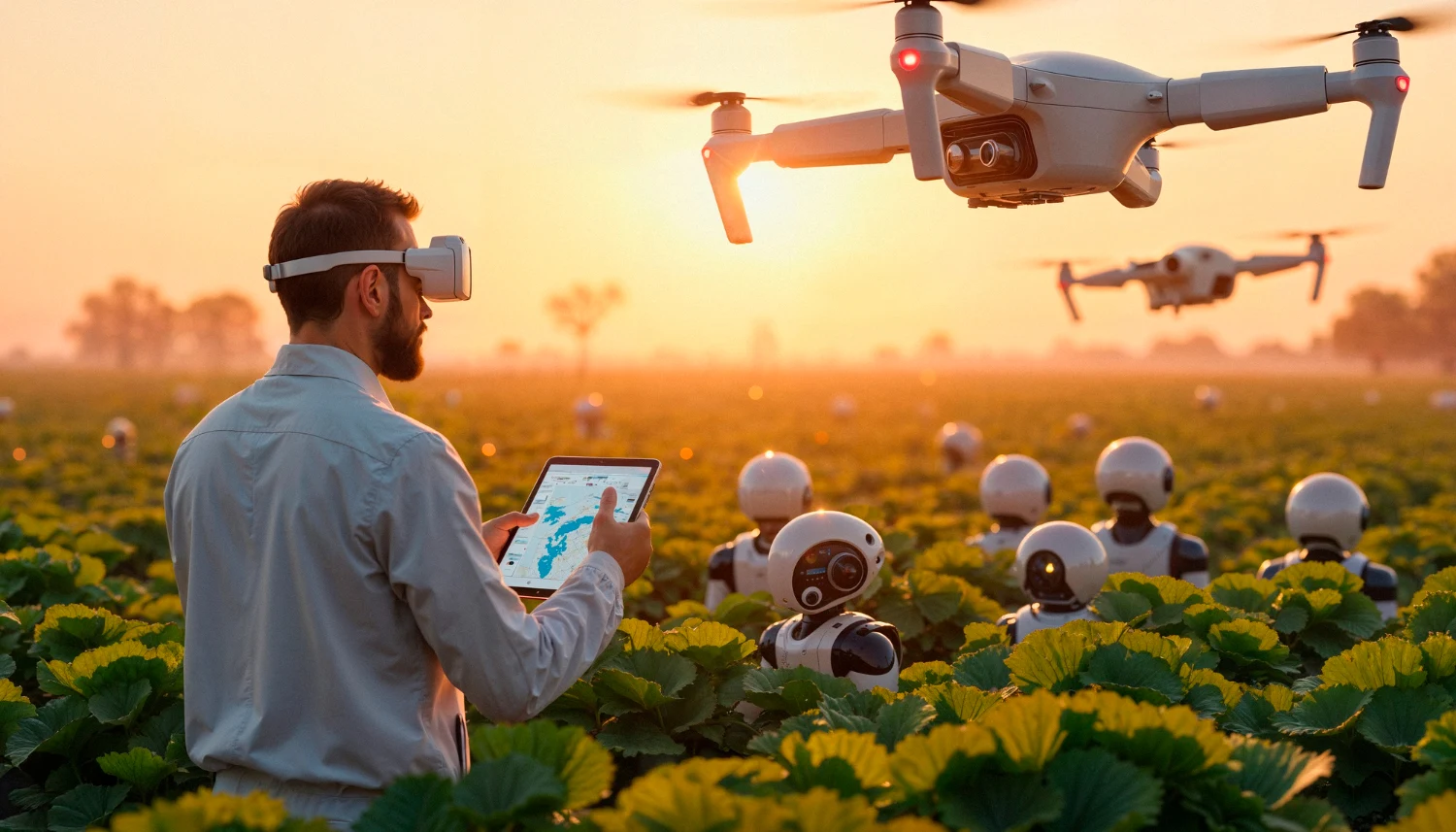
Agriculture is the backbone of global food security, yet it faces unprecedented challenges such as climate change, soil degradation, water scarcity, rising input costs, and a rapidly growing population. Traditional farming methods alone are no longer sufficient to meet future demand. This is where technology-driven agricultural R&D emerges as a game changer.
Modern agriculture is shifting from experience-based decisions to data-driven, science-backed innovations. Countries, agribusinesses, and research institutions investing in agricultural research and development (R&D) are witnessing measurable improvements in crop yield, resilience, and profitability.
This article explores why technology-driven R&D is essential for modernizing agriculture and how it directly contributes to higher crop yield, sustainable farming, and long-term food security.
Global food demand is expected to rise sharply over the next two decades. According to estimates supported by organizations like the Food and Agriculture Organization, agricultural productivity must increase significantly—without expanding farmland or exhausting natural resources.
Modern agriculture requires innovation at the research level, not just mechanization at the farm level.
Technology-driven agricultural R&D refers to the integration of advanced technologies into research, testing, and innovation processes to improve farming outcomes.
These technologies enable researchers to understand crops, soil, climate, and pests at a micro level, allowing precise and scalable solutions.
Advanced R&D enables scientists to develop high-yield crop varieties that are resistant to drought, pests, and diseases.
Biotechnology-backed research ensures crops are optimized for both yield and sustainability.
R&D fuels precision agriculture, where inputs are applied based on real-time data rather than guesswork.
By optimizing fertilizer, water, and pesticide usage, farmers achieve higher crop yield with lower input cost.
Pest infestation and plant diseases are major causes of yield loss. Technology-driven R&D enables early detection and targeted control.
This results in lower crop loss and healthier produce, directly improving productivity.
Climate change has made farming increasingly risky. R&D helps agriculture adapt rather than suffer.
Technology-driven research ensures yield stability even under extreme environmental conditions.
Healthy soil is the foundation of high crop yield. Modern R&D uses technology to decode soil biology.
Improved soil health leads to long-term yield improvement, not short-term gains.
Artificial Intelligence has transformed agricultural research from reactive to predictive.
Big data collected from satellites, sensors, and farms worldwide enables scalable agricultural innovation.
Modern agricultural breakthroughs increasingly come from collaboration between governments, research institutes, and agritech companies.
Institutions aligned with global goals emphasize innovation-driven food security and sustainable agriculture, accelerating commercialization of research outcomes for farmers.
Beyond yield, modern R&D strengthens farm economics.
Investment in agricultural R&D delivers multiplying returns across the value chain.
In agrarian economies, even small yield improvements create massive national benefits.
Modern research ensures farming remains viable, profitable, and future-ready.
As technology becomes more affordable and digital literacy improves, these barriers are rapidly shrinking.
By 2030, agriculture will be defined not by land size, but by research intensity and technological adoption.
Farms connected to research labs through data pipelines will outperform traditional systems in both yield and sustainability.
It is the use of advanced technologies such as AI, IoT, and biotechnology in agricultural research to improve productivity and sustainability.
R&D improves seed quality, soil health, pest control, and precision input usage—leading to higher and more stable yields.
Yes. Scalable tools like mobile advisories, smart irrigation, and improved seeds directly benefit smallholders.
Yes. It reduces resource waste, chemical overuse, and environmental damage.
AI supports yield prediction, early disease detection, input optimization, and smarter decision-making.
Modernizing agriculture is no longer about mechanization alone—it is about innovation at the research level. Technology-driven R&D empowers farmers with smarter tools, scientists with deeper insights, and nations with resilient food systems.
The path to higher crop yield, sustainable farming, and global food security runs through research, data, and technology. Investing in agricultural R&D today means shaping the future of food itself.
We make it our business to advance your business. Get in touch to find out more.
ANBR ELIXIR PVT LTD
PLOT NO. 5144, NEAR PRIME INDUSTRIES, SEVEN WATER TANK ROAD,
NEAR PARAS CHOWKDI, G.I.D.C. INDUSTRIAL ESTATE,
ANKLESHWAR – 393 002.
DIST. BHARUCH, GUJARAT
ANBR ELIXIR PRIVATE LIMITED
Plot No. 10008-3, Near BEIL,
GIDC, Ankleshwar,
Dist :-Bharuch, 393002, Gujarat